
Fall Skincare Routine for Sensitive Skin: A Gentle Guide for Cooler Weather


Fall is beautiful, crisp mornings, cozy sweaters, and cooler evenings, but your sensitive skin may not be quite as excited about the seasonal change.
As temperatures drop and humidity shifts, skin can start feeling tighter, drier, itchier, or more reactive. Add indoor heating and cold wind, and a calm complexion can quickly become an irritated one.
The good news? You don't need to completely overhaul your skincare routine for fall. Sensitive skin usually does better with a few thoughtful changes rather than a 10-step seasonal reset.
The goal is simple: cleanse gently, hydrate, support your skin barrier, protect against UV rays, and avoid unnecessary irritation.
Here's how to build a simple fall skincare routine for sensitive skin that keeps your complexion comfortable, hydrated, and healthy.
Why Does Sensitive Skin Need Extra Care in Fall?
Your skin is constantly responding to its environment. When summer gives way to cooler weather, changes in temperature and humidity can affect how well your skin holds onto moisture.
Cold outdoor air, wind, and indoor heating can leave skin feeling dry and tight.
Read our detailed guide on why skin gets drier in fall.
If your skin is already sensitive or easily irritated, you may notice:
- Tightness after cleansing
- Dry or flaky patches
- Increased redness
- Stinging when applying skincare
- Rougher-looking texture
- More noticeable sensitivity to products that normally feel comfortable
This doesn't mean your entire routine needs to change. Instead, pay attention to how your skin is behaving and adjust gradually.
For sensitive skin, consistency is often more helpful than constantly adding new products.
Your Fall Skincare Routine for Sensitive Skin
A straightforward routine can be enough:
Morning
- Gentle cleanse
- Hydrating moisturizer
- Broad-spectrum SPF
Evening
- Gentle cleanse
- Hydrating treatment, if needed
- Moisturizer (Night cream)
If your skin is particularly reactive, start with these basics before introducing additional treatments.
1. Start With a Gentle Cleanser
Cleansing should leave your skin clean, not squeaky, tight, or uncomfortable.
During fall, consider switching from a cleanser that leaves your complexion feeling stripped to a gentler formula. Sensitive skin generally benefits from avoiding harsh cleansing and unnecessary irritation.
Use lukewarm rather than hot water, and don't spend too long washing your face.
If your skin is very dry or sensitive, you may not need to aggressively cleanse twice a day. A gentle evening cleanse may be enough for some people, depending on their skin and what they wear during the day.
Fall tip: If your face feels tight immediately after cleansing, don't ignore it. Your cleanser may be too drying for your current routine.
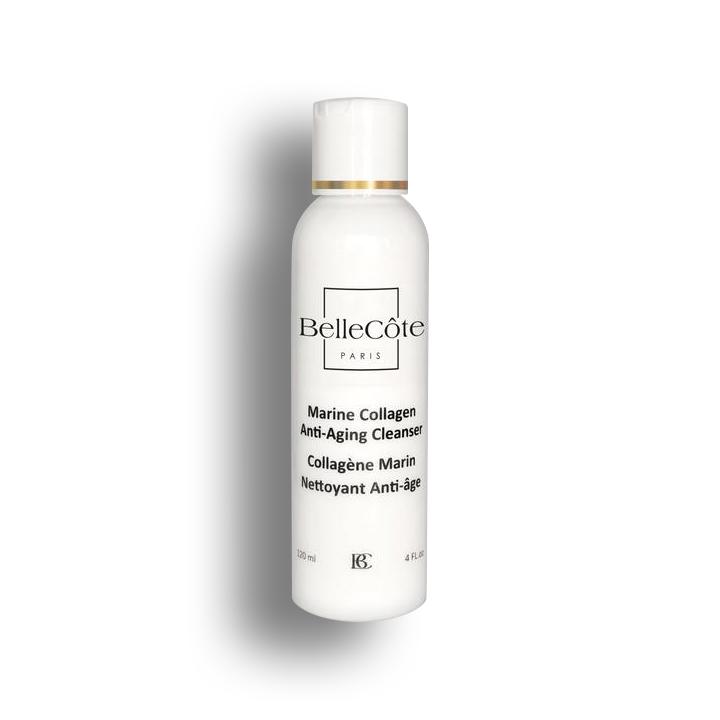
For a cleanser that does more than simply wash away the day, consider BelleCôte Paris’ Marine Collagen Anti-Aging Cleanser. Designed for normal-to-dry, dehydrated and mature skin, its creamy formula combines marine collagen and elastin, marine peptides, jojoba and avocado oils, and mineral-rich sea-derived ingredients. Massage it onto damp skin for about a minute, then rinse and follow with Marine Collagen Anti-Aging fermented hydrating toner; it feels like a sea breeze.
2. Add Hydration Before Your Skin Starts Flaking
Fall is not the time to wait until your skin becomes visibly dry before adding moisture.
A hydrating toner or serum can provide an additional layer of moisture before your moisturizer. Look for ingredients commonly used to support hydration, such as hyaluronic acid, glycerin, aloe, or other skin-conditioning ingredients.
But remember: sensitive skin doesn't automatically need more products. If your moisturizer is doing the job, you don't need to add three different hydrating serums just because it's fall.
If your skin is highly reactive, introduce any new product gradually rather than adding several products at once.
3. Choose a More Nourishing Moisturizer
This is often the most important fall skincare swap.
A lightweight summer lotion may suddenly feel like it disappears five minutes after application. If your skin starts feeling dry or tight, consider moving to a more nourishing cream.
For sensitive skin, look for moisturizers containing ingredients such as:
- Ceramides to support the skin barrier
- Glycerin to attract and retain moisture
- Hyaluronic acid for hydration
- Shea butter for richer moisturization
- Emollients that help soften dry, rough skin
BelleCôte Paris Day Light Moisturizer with Phyto Stem Cells is a lightweight cream designed for normal-to-dry, sensitive and dehydrated skin. Its formula includes ingredients such as ceramides, sodium hyaluronate, aloe vera, shea butter, marine peptides and bilberry extract, providing nourishment without an especially heavy feel.
Learn more in our guide to when and why to switch to a richer moisturizer in fall.


4. Don't Put Your Sunscreen Away
Cooler temperatures don't mean UV exposure has disappeared.
Sunscreen remains an important part of your fall skincare routine.
Learn more in our detailed article on whether you still need sunscreen in October.
Use a broad-spectrum SPF 30 or higher and apply it every morning. This is particularly important if you're spending time outdoors, driving, walking, exercising, or sitting near windows for extended periods.
If your sensitive skin doesn't tolerate certain sunscreen formulas well, you may prefer a mineral sunscreen containing filters such as zinc oxide or titanium dioxide.
BelleCôte Paris Double Sun Protection Cream SPF 30 is a mineral sunscreen containing zinc oxide, titanium dioxide and marine sun filters (Chlorella and Spirulina). It is for all skin types, including sensitive skin, and provides UVA/UVB protection with a lightweight, matte finish.
5. Be Careful With Exfoliation
Here's where many fall skincare routines go wrong.
You notice dullness or flaky skin, so you reach for a scrub, acid toner, exfoliating mask, and suddenly your sensitive skin is red and irritated.
Flaky skin isn't always a sign that you need more exfoliation. Sometimes it needs more moisture.
If your skin is already dry, stinging, peeling, or irritated, pause exfoliation and focus on gentle cleansing and moisturization instead.
If your skin is comfortable and tolerates exfoliation, you can consider using a gentle exfoliating product occasionally rather than making it a daily step. BelleCôte's Organic Seaweed Exfoliator uses mandelic acid, lactic acid, and salicylic acid to exfoliate. It also contains laminaria extract that brightens and hydrates the skin.
Important: Because that's a combination of exfoliating acids, sensitive skin should introduce it cautiously rather than assuming it will be suitable. Patch-test first, start infrequently, and stop if you develop persistent burning, redness, or irritation.

6. Keep Your Fall Routine Simple
Sensitive skin and skincare experimentation don't always make the best combination.
Fall can tempt you to buy a new cleanser, toner, serum, exfoliant, retinol and mask all at once. Resist the urge.
Instead, introduce one new product at a time. This makes it much easier to identify what's helping, and what's causing irritation.
7. Patch-Test Before Trying Something New
If your skin reacts easily, don't make the first application of a new product a full-face experiment.
Patch testing can help you identify whether your skin tolerates a product before incorporating it into your routine.
And one important distinction: “unscented” doesn't necessarily mean fragrance-free. If fragrance is a known trigger for your skin, look specifically for products labeled fragrance-free.
8. Don't Rush Into Retinol Just Because It's Fall
You may have heard that fall is the perfect time to start retinol. But sensitive skin doesn't need to follow a seasonal trend. Retinoids can cause dryness and irritation, particularly when you're first starting them.
If your skin is already struggling with seasonal dryness, focus on getting your barrier comfortable first.
Once your skin is stable, you can consider introducing a retinoid gradually if it's appropriate for you.
Once your skin is stable, you can consider introducing a retinoid gradually if it's appropriate for you. You can start with our PM Perfect serum featuring retinol naturally derived from white rose and baobab oil for a gentle addition to your nighttime skincare routine.
The same principle applies to strong vitamin C formulas, exfoliating acids, and other active ingredients:
One active. Slowly introduced. Plenty of hydration.
If your skin is persistently reactive, talk to a dermatologist before adding prescription-strength treatments.
9. Give Your Skin Some Protection Beyond Skincare
Your skincare routine isn't the only thing affecting sensitive skin in fall.
Cold wind can leave exposed skin feeling uncomfortable, while indoor heating can make the environment drier.
A few simple habits can help:
- Keep showers warm rather than hot.
- Keep showers relatively short.
- Moisturize soon after washing.
- Use a humidifier if indoor air becomes very dry.
- Protect your face from the cold wind when outdoors.
- Keep a nourishing hand cream nearby.
- Don't pick or scrub flaky patches.
Think of fall as a season for protecting your skin barrier, not testing its limits.
What Should Sensitive Skin Avoid in Fall?
There's no universal “do not use” list because everyone's skin is different. But if your skin is easily irritated, be cautious with:
- Harsh scrubs
- Over-exfoliation
- Very hot water
- Introducing multiple actives simultaneously
- Strongly fragranced products
- Rapidly changing your entire routine
- Using retinoids when your skin is already irritated
Most importantly, don't mistake burning or intense stinging for a sign that a product is working.
Your skincare routine should leave your skin feeling comfortable, not like it's fighting for survival.
What If Your Skin Is Still Red, Dry or Irritated?
Sometimes what looks like ordinary seasonal dryness is something else.
Persistent redness, itching, burning, cracking, rash-like patches, or worsening symptoms may be associated with conditions such as eczema, rosacea, or contact dermatitis.
If you're dealing with persistent sensitivity or signs of a compromised barrier, you might find our guide on how to repair a damaged skin barrier helpful.
If your skin continues to worsen despite simplifying your routine, or if dryness becomes painful, cracked, bleeding, or significantly irritated, consider speaking with a dermatologist.
And if a skincare product consistently burns or causes a reaction, don't keep using it simply because it was expensive or highly recommended.
The Bottom Line: Keep Your Fall Skincare Routine Simple
You don't need a completely new shelf of products every time the season changes.
For sensitive skin, a good fall routine comes down to four priorities:
Cleanse gently. Hydrate consistently. Moisturize generously. Protect with SPF.
Then adjust based on what your skin is actually telling you.
If your summer moisturizer suddenly isn't enough, switch to something more nourishing. If your skin starts stinging, pull back on active ingredients. If the air becomes dry, focus on hydration. And if your skin is happy with your current routine, don't change it just because the calendar says fall.
That's the real secret to fall skincare: less chasing, more listening.
Be your own skin detective!
Frequently Asked Questions
Disclaimer: This article is for general informational purposes only and does not constitute medical advice.
0 comments